
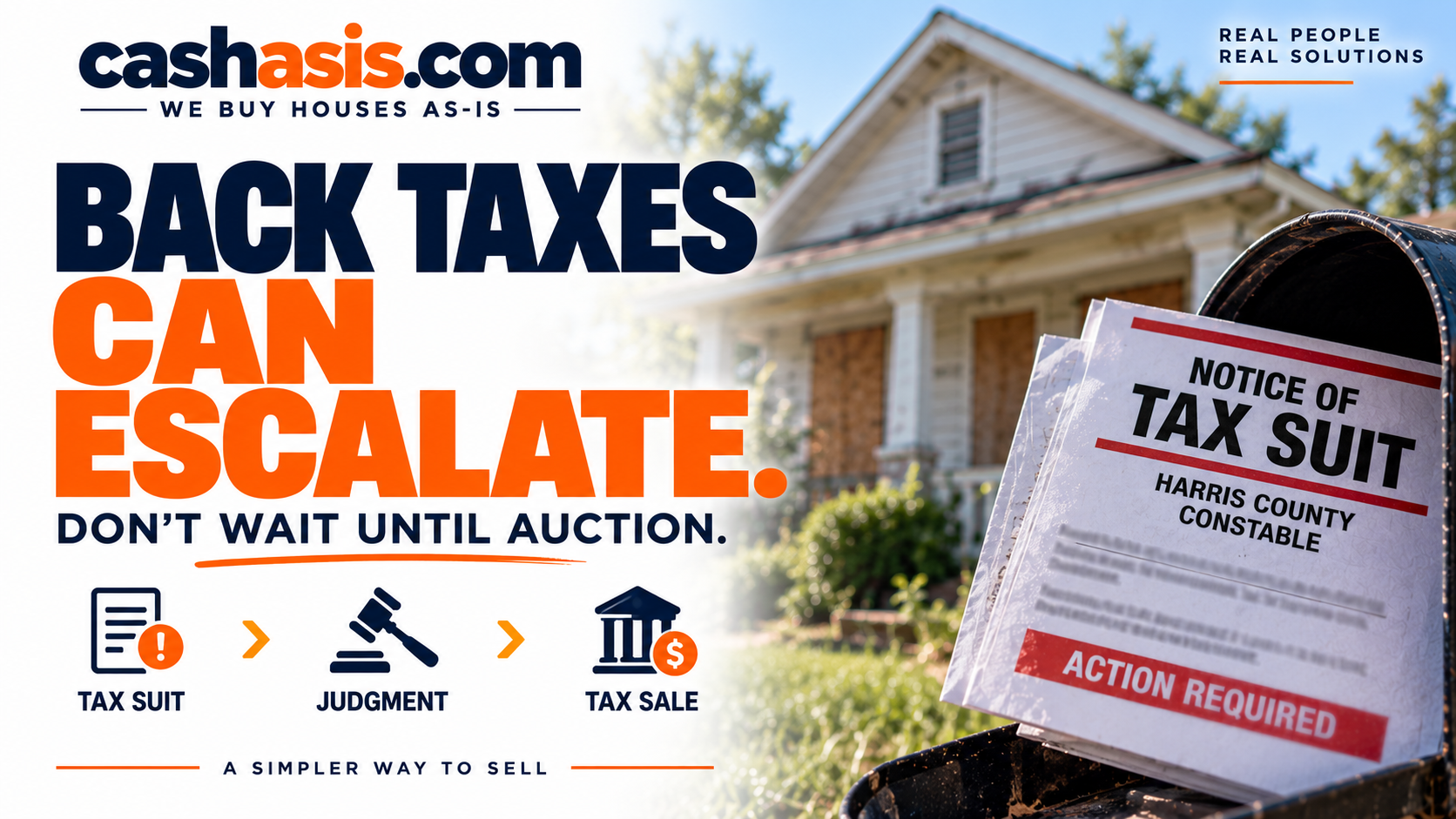
Back taxes can become a bigger problem
A delinquent property-tax bill is not something to assume will simply sit there unchanged.
Depending on the circumstances, unpaid taxes can lead to additional collection activity and legal proceedings.
A possible progression can look like:
PAST DUE TAXES → TAX SUIT → JUDGMENT → POTENTIAL TAX SALE
Not every property follows the same timeline or exact sequence, but the important point is simple: waiting can reduce the amount of time you have to deal with the problem.
Past-due property taxes
Once property taxes become delinquent, the balance can grow as applicable penalties, interest, fees, or collection costs are added.
At this stage, there may still be more time to evaluate the property, understand the balance, and decide what you want to do.
A tax suit can make the situation more serious
If delinquent taxes remain unresolved, a taxing authority or other authorized party may pursue collection through a lawsuit.
Receiving tax-suit paperwork is a sign that the situation has moved beyond simply having an unpaid bill.
If you receive legal papers, read them carefully and consider getting appropriate legal advice about deadlines and your rights.
A judgment can move the property closer to a forced sale
A court judgment involving delinquent property taxes can allow further enforcement steps under the applicable process.
That can ultimately include a tax foreclosure sale.
The exact process, deadlines, redemption rights, and available remedies depend on the property and circumstances, so do not assume you have a particular amount of time based on someone else’s situation.
Selling may still be possible before it gets that far
If you are already behind—or especially if you have received tax-suit or judgment paperwork—this is a good time to find out what the property is worth to a cash buyer.
Getting an offer does not obligate you to sell.
It gives you a real number to compare with:
- the delinquent tax balance;
- any mortgage payoff;
- other valid liens or title requirements; and
- the amount of time available to complete a sale.
If you decide to sell, applicable delinquent taxes and other required amounts can be addressed through the title and closing process from the transaction proceeds.
Don’t wait until the property is headed to auction
The closer a property gets to a scheduled tax sale, the less room there may be for title work, payoff information, required documents, signatures, and closing.
Selling before the situation reaches that point can give you more control over the timing and transaction.
CashAsIs buys properties as-is, so you do not need to repair, clean, stage, or show the property before we make an offer.
Find out what your property could sell for
Send us:
- The property address
- Any delinquent-tax statement you have
- Any tax-suit, judgment, or sale notice you have received
We’ll review the property and let you know what we can offer.
If the taxes are already escalating, find out whether selling works before the timeline gets tighter.
CashAsIs is a property buyer, not a law firm, tax adviser, or tax-relief service. Property-tax enforcement procedures, deadlines, judgments, sales, and rights vary by jurisdiction and circumstances. Contact the appropriate taxing authority or a qualified professional for advice about your specific situation.