
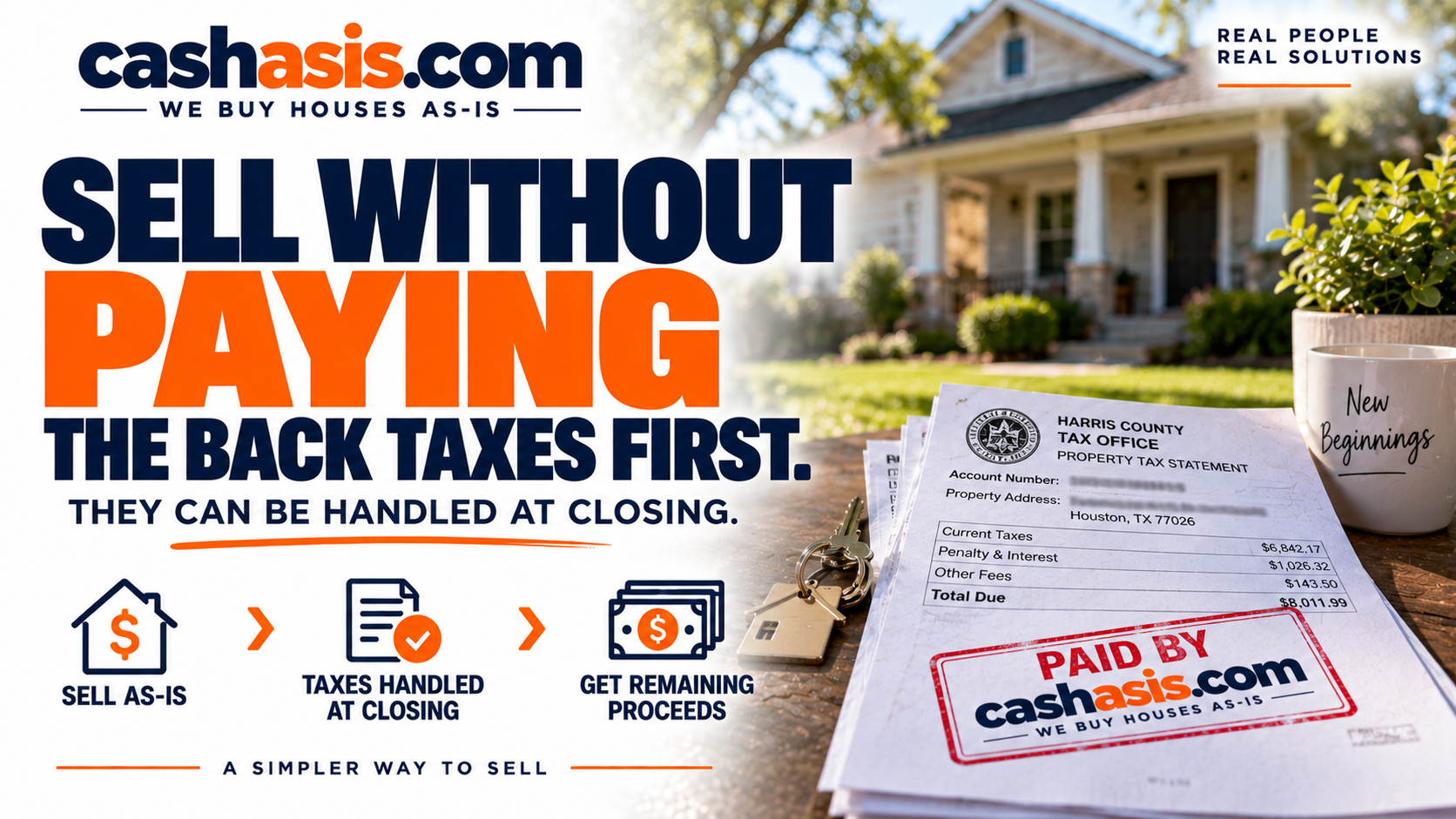
Yes — owing back taxes does not automatically prevent a sale
If you are behind on property taxes, you may still be able to sell the property.
And you generally do not need to pay the entire delinquent balance out of pocket just to find out what the property could sell for.
The basic transaction can look like:
CASH SALE → TITLE & PAYOFFS → TAXES HANDLED AT CLOSING → APPLICABLE REMAINING SELLER PROCEEDS
Start by getting a real offer
Before deciding what to do, it helps to know the actual purchase price.
CashAsIs can review the property as-is and make a cash offer without requiring you to first:
- pay the delinquent taxes;
- make repairs;
- clean out the property;
- stage it; or
- prepare it for showings.
Getting an offer does not obligate you to sell. It gives you a number to compare against what is owed.
Title determines what must be paid
If you accept an offer and sign a purchase agreement, the transaction moves into title.
The title company reviews the property and determines the amounts that must be addressed for the sale to close.
Depending on the property, that may include:
- delinquent property taxes;
- current taxes or applicable prorations;
- mortgage payoff;
- tax liens or judgments;
- other valid liens; and
- additional title requirements.
Back taxes can be handled through closing
Applicable delinquent taxes and other required amounts can be paid from the transaction proceeds as part of closing.
That means a seller may not need to bring the entire tax balance current beforehand simply to pursue a sale.
The final closing statement shows the purchase price and the amounts being paid through the transaction.
What happens to the remaining money?
After the amounts required for closing are accounted for, any applicable remaining seller proceeds are disbursed according to the closing statement.
A simplified example:
Purchase Price
− Tax Balance
− Mortgage / Valid Liens, if applicable
− Applicable Transaction Charges
= Remaining Seller Proceeds
The actual numbers vary by property, which is why getting both an offer and accurate title information matters.
If there is already a tax suit or sale date, timing matters
Selling may become more time-sensitive if the property is already involved in a tax suit, judgment, tax foreclosure, or scheduled sale.
A signed purchase agreement alone does not finish the transaction.
Title work, payoff information, required documents, signatures, closing, and funding still have to be completed.
If the tax problem is already escalating, waiting can leave less time to complete a sale.
See whether selling works for your numbers
Send us:
- The property address
- Any delinquent property-tax statement you have
- Any tax-suit, judgment, or sale notice you have received
We’ll review the property and let you know what we can offer.
You don’t have to solve the tax problem before getting an offer. Find out what the property could sell for first, then see whether the numbers make sense.
CashAsIs is a property buyer, not a law firm, tax adviser, or tax-relief service. Tax balances, liens, judgments, legal proceedings, and closing requirements vary by property. The title company determines the amounts that must be addressed for a particular closing. Consult the appropriate taxing authority or a qualified professional regarding your specific tax or legal situation.